


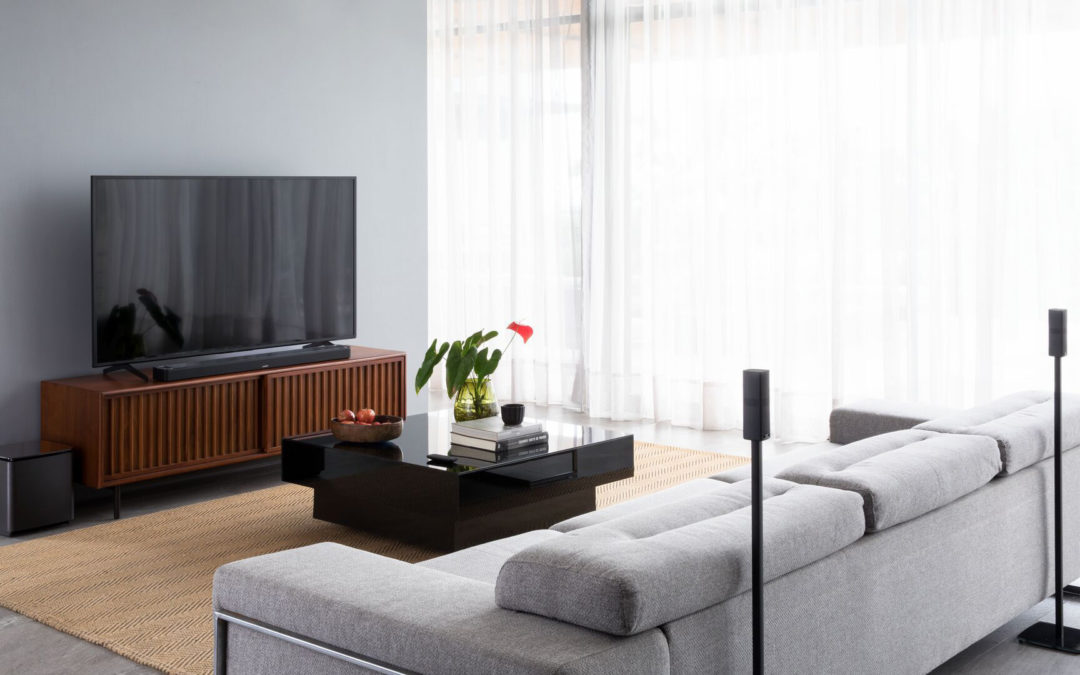
TLDR: a 5.1 setup needs five speakers (front left, center, front right, two surrounds) plus a subwoofer, positioned at specific angles around your main listening seat, while a 7.1 setup adds two rear speakers behind you for a fuller wraparound effect. Placement matters as much as the speakers themselves — the same system can sound completely different depending on where each channel sits in the room.
What speakers do I need for a 5.1 setup?
A 5.1 system is built from five full-range channels plus a subwoofer, which is what the “.1” refers to. You’ll need a front left speaker, a center channel, a front right speaker, and two surround speakers, along with a dedicated subwoofer for low-frequency effects. This is the baseline layout that most movies, shows, and broadcast audio are mixed for, which makes it the most practical starting point for a media room speaker placement project, whether you’re working with a Bose soundbar-and-speaker system or a full component setup.
Where do I place 5.1 speakers?
Speaker placement follows the ITU-R BS.775 standard, the international reference most AV receivers and soundbar systems are calibrated against. Here’s how to place each channel:
- Front left and right: Position at 22 to 30 degrees off-center from your main seat, with tweeters at ear height. These carry most of the music and dialogue, so getting the angle right keeps the stereo image balanced.
- Center channel: Sits directly below or above your TV or screen, aimed straight at the listening position. This is where the bulk of dialogue comes from, so keeping it aimed directly at your seat matters more than with any other channel.
- Surrounds: Place at 90 to 110 degrees off-center — roughly to the sides of your seat, or slightly behind it — mounted about 2 to 3 feet above ear level. These fill in ambient sound and effects, giving the room a sense of depth beyond the front stage.
- Subwoofer: The one channel where placement is flexible. Walk around the room while playing bass-heavy audio and note where it sounds fullest — sometimes called a “sub crawl” — as the easiest way to find a good spot.
What speakers do I need for a 7.1 setup?
A 7.1 system takes the same five channels and subwoofer as 5.1 and adds a second pair of surround speakers, for seven full-range channels total. In practice, this means your original surrounds shift forward to become side surrounds, while a new pair of rear surrounds fills in the back of the room. This layout is the foundation that Dolby Atmos and other object-based formats build on, so if you’re planning to add ceiling speakers down the line, starting with a proper 7.1 rear speaker placement makes that upgrade easier later.
Where do I place 7.1 speakers, including the rear speakers?
A 7.1 setup builds on the standard 5.1 layout by adding a second pair of surrounds behind you, so getting the angles and spacing right matters more than ever. Here’s how to place each channel:
- Front left and right: Position at 22 to 30 degrees off-center from your main seat, with tweeters at ear height. This stays the same as a 5.1 setup and doesn’t change with the added rear channels.
- Center channel: Sits directly below or above your TV or screen, aimed straight at the listening position, exactly as it does in 5.1.
- Side surrounds: Mount at 90 to 110 degrees off-center from your seat — essentially level with or just behind your ears on either side. This is what creates that “surrounded” feeling during action scenes, with sound passing directly beside you rather than staying up front.
- Rear surrounds: Place behind you at 135 to 150 degrees, at least 6 feet apart and equidistant from your seat. These handle sound effects that need to feel like they’re coming from directly behind you, completing the full circle of audio around the room.
- Height: Keep both surround pairs at the same 2- to 3-foot height above ear level used in a 5.1 layout.
- Subwoofer: Placement stays flexible, same as in a 5.1 setup — a sub crawl is still the easiest way to find the best spot in the room.
- Shallow rooms: If your room is too shallow for true rear placement, angling the rears closer to 150 degrees is an acceptable compromise.
- No space behind seating: If there’s genuinely no room for a rear pair, it’s better to stick with 5.1 than force an awkward placement.
Frequently Asked Questions
Where should I place ceiling speakers for a 7.1 Atmos setup?
If you’re adding height channels for a 7.1.4 Dolby Atmos setup, the front height pair goes at roughly 45 degrees of elevation, aligned with your front left and right speakers. The rear height pair sits at the same 45-degree elevation but aligned with your rear surrounds instead. Ceilings between 8 and 11 feet tend to work best for this — below about 7.5 feet, the sense of height starts to flatten out because the angle between your ears and the ceiling speakers becomes too narrow to feel like it’s coming from above.
What's the correct home theater speaker placement if my TV is in a corner?
A corner TV placement doesn’t change where your front left, center, and right speakers should sit relative to your seat — those angles are measured from your listening position, not from the TV itself. What it does affect is your front left or right speaker, which may end up closer to a side wall than ideal. In that case, angling that speaker slightly toward the listening seat and pulling it a foot or two away from the wall helps reduce boxy reflections. We’ve walked through this exact scenario in condo units across Metro Manila, where an L-shaped living room often forces the TV into a corner, and the fix is almost always the same: prioritize your seat’s angles first, then adjust individual speaker toe-in to compensate for the room shape.
Where should the center speaker go?
Home theater center speaker placement is one of the simpler decisions in the whole setup: it sits directly below or above the screen, centered, and aimed at your main listening seat. Dialogue comes almost entirely from this channel, so keeping it unobstructed matters more than exact height — avoid tucking it behind a TV stand lip or soundbar shelf that could muffle high frequencies.
Do I need a receiver to run a 5.1 or 7.1 system?
Yes, in a traditional component setup, you’ll need an AV receiver to power and route audio to each individual speaker channel. If you’re using a soundbar-based system instead, many Bose soundbars handle this routing internally and pair wirelessly with a subwoofer and rear speakers, which simplifies setup considerably compared to running speaker wire to each channel.
Can I mix speaker brands in a 5.1 or 7.1 setup?
Technically yes, but matching timbre across channels — especially the front three — makes dialogue and effects sound more consistent as they move between speakers. We’d recommend keeping at least your front left, center, and right speakers from the same product line, since mismatched tonal character between those three channels is usually the most noticeable inconsistency during movies.
How far should surround speakers be from the listening position?
There’s no strict distance requirement, only angle guidelines, since most AV receivers and soundbar systems calibrate output level and delay automatically based on distance. As a general rule, 3 to 6 feet from your main seat keeps surrounds close enough to feel enveloping without sounding disconnected from the front soundstage, though the right distance ultimately depends on your room size.
Shop for Home Theater Speakers & Systems at Bose.ph
Ready to build out your own setup? Browse our full soundbars & bass modules lineup or check out our surround speakers selection to find the right pieces for your room.
Free Shipping Nationwide | 100% Original | Authorized Distributor
Written by the Bose PH product content team, who cover home theater setup and speaker placement guidance based on hands-on testing across different room layouts.
Related reading
For a deeper look at how these two layouts differ beyond placement, see our guide on 5.1 vs. 7.1 surround sound, and if you’re starting from a soundbar-based system, check how to connect your speakers to your smart TV before mapping out channel placement. If you’re building out a full system, our Bose Lifestyle Ultra Soundbar review covers how the soundbar, subwoofer, and rear speakers pair together in practice.