


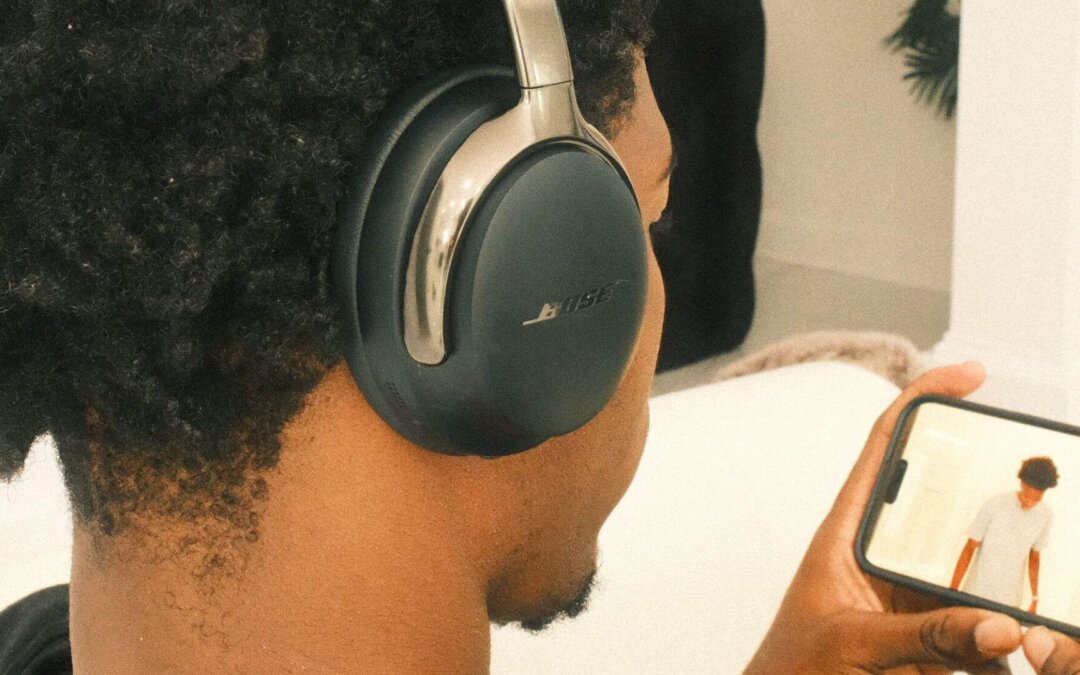
In the Philippines, Bose’s current QuietComfort lineup has four models — the QuietComfort Headphones (2nd Gen) and QuietComfort Ultra Headphones (2nd Gen) as over-ear options, and the QuietComfort Earbuds and QuietComfort Ultra Earbuds (2nd Gen) as in-ear options. Which one is right for you comes down to how you’ll actually use them — commuting, exercising, working from home, or flying — more than which one simply has the most features.
What’s the difference between the four current QuietComfort models?
The split comes down to two questions: over-ear or in-ear, and standard or Ultra. The QuietComfort Headphones (2nd Gen) and QuietComfort Earbuds are Bose’s more accessible entries, with strong noise cancellation and solid battery life at a lower price point. The QuietComfort Ultra Headphones (2nd Gen) and the QuietComfort Ultra Earbuds (2nd Gen) add Bose’s Immersive Audio spatial sound feature and generally more refined ANC tuning, at a higher price. Beyond price, the bigger practical divide is fit: over-ear headphones tend to isolate sound more completely and stay comfortable for long stretches, while in-ear earbuds are lighter, more portable, and better suited to movement.
| QuietComfort Headphones (2nd Gen) | QuietComfort Ultra Headphones (2nd Gen) | QuietComfort Earbuds | QuietComfort Ultra Earbuds (2nd Gen) | |
|---|---|---|---|---|
| Format | Over-ear | Over-ear | In-ear | In-ear |
| Tier | Standard | Ultra | Standard | Ultra |
| Battery life | Up to 24 hours (ANC on) | Up to 30 hours ANC on, 45 hours ANC off | Up to 8.5 hours per charge | Up to 6 hours per charge, ~24 hours with case |
| Water resistance | None | None | IPX4 | IPX4 |
| Spatial audio | Yes (TrueSpatial / Immersion Mode) | Yes (Immersive Audio) | No | Yes (Immersive Audio) |
| Best for | Everyday indoor use, budget-conscious buyers who still want spatial audio | Travel, flights, long listening sessions | Commuting, gym, budget-conscious buyers | Workouts plus spatial audio in one pair |
For the exact spec-by-spec breakdown across all four current models, our full headphones comparison guide goes deeper than the summary above.
Which QuietComfort should you buy for your lifestyle?
If you commute daily — on the MRT, in EDSA traffic, or on a jeepney — either format works well, since ANC strength matters more than format here. The standard QuietComfort Headphones or Earbuds handle a noisy commute confidently; upgrade to the Ultra line if you also want spatial audio for music or podcasts during the ride.
If you exercise, hit the gym, or run regularly, the QuietComfort Earbuds or Ultra Earbuds (2nd Gen) are the better fit. Their IPX4 rating handles sweat, and the secure eartip and stability band fit stays in place better during movement than over-ear headphones would. The over-ear models carry no water resistance at all, so they’re not built for a sweaty workout.
If you work from home or take frequent calls, either format works, since all four models have built-in microphones. Over-ear headphones tend to be more comfortable for back-to-back meetings across a full workday, while earbuds are easier to slip on and off between calls.
If you travel or fly often, the over-ear QuietComfort Ultra Headphones (2nd Gen) is the strongest pick — Immersive Audio and Cinema Mode are genuinely useful for long-haul entertainment, and over-ear cushioning tends to hold up better than earbuds during hours of continuous wear.
If budget is the main factor, the standard QuietComfort Headphones and QuietComfort Earbuds both deliver Bose’s core noise-cancellation strength without the Ultra price premium — the Ultra tier is really about added features like spatial audio, not a dramatically quieter listening experience.
What’s the difference between the three QuietComfort 2nd Gen models and the older ones?
If you already own a first-generation model and are deciding whether to upgrade to the best wireless headphones and earbuds to date, here’s what changed. Three of the four current models carry the “2nd Gen” name — the QuietComfort Headphones, QuietComfort Ultra Headphones, and QuietComfort Ultra Earbuds all recently got a refresh, and each upgrade looks a little different.
The QuietComfort Headphones (2nd Gen)
is the biggest jump of the three. It borrows features that used to be Ultra-only: Bose TrueSpatial spatial audio, plus new Cinema and Immersion modes, and a more robust ANC system that Bose says now performs at the same level as the Ultra Headphones. The redesign brings oval-shaped earcups and a smoother sliding headband, though the tradeoff is that the 3.5mm aux port is gone, replaced by lossless USB-C wired listening instead. Battery life stays roughly the same as the original at around 24 hours with ANC on.
The QuietComfort Ultra Headphones (2nd Gen)
picks up the ability to fully switch ANC off, something the first Ultra Headphones couldn’t do, along with a faster-reacting ActiveSense mode that filters out sudden noise spikes like sirens or car horns. Battery life sees the clearest improvement here — up to 30 hours with ANC on and 45 hours with it off, compared to 24 hours on the original — plus new lossless audio support over USB-C.
The QuietComfort Ultra Earbuds (2nd Gen)
update is more incremental. The headline additions are a wireless charging case, an improved ActiveSense response, and better call quality through Bose’s newer speech-isolation processing. If you already own the first-generation Ultra Earbuds, this is the least urgent of the three upgrades — the core ANC and sound experience carries over largely unchanged.
According to independent lab testing by SoundGuys, the QuietComfort Ultra Earbuds reduce outside noise by roughly 87 to 90 percent in real-world conditions — a meaningful difference whether you’re dealing with a noisy EDSA commute or an open-plan office, and a good baseline for what to expect across the current QuietComfort lineup regardless of which model you land on.
Frequently Asked Questions
Is Bose QuietComfort earbuds waterproof?
No, not fully. Both the QuietComfort Earbuds and QuietComfort Ultra Earbuds (2nd Gen) carry an IPX4 rating, which protects against sweat and light splashes but not submersion. That’s enough for a sudden drizzle or a sweaty gym session, but not a full soaking. The over-ear QuietComfort Headphones and QuietComfort Ultra Headphones carry no water resistance rating at all, so they should be kept away from rain and heavy sweat entirely.
Are QuietComfort earbuds good for exercise, the gym, or running?
Yes, for moderate workouts. The IPX4 rating on both earbud models is built to handle sweat, and the secure eartip and stability band fit holds up well during movement, including running. If you’re doing high-intensity training with heavy, sustained sweat, keep in mind IPX4 is a moderate rating, not a rugged sport rating — wipe the earbuds down and let them air dry after a hard session.
Can you wear Bose QuietComfort headphones or earbuds in the rain?
For the earbuds, light rain is generally fine thanks to the IPX4 rating, but a genuine downpour goes beyond what that rating protects against. For the over-ear QuietComfort and QuietComfort Ultra Headphones, avoid the rain altogether — neither model carries any water resistance rating, and moisture exposure can damage the earcup cushions and internal electronics over time.
Can you talk on the phone with QuietComfort earbuds and headphones?
Yes, across all four models. Each has a built-in microphone system designed for calls, and the newer Ultra Earbuds (2nd Gen) in particular improved call quality noticeably over their predecessor with better noise suppression to isolate your voice from background sound — useful if you’re taking calls from a noisy street or a shared coworking space.
Can you sleep with QuietComfort earbuds in?
It’s not really what they’re built for. The QuietComfort Earbuds and Ultra Earbuds are designed for all-day wear while active, not specifically for side-sleeping, and the firmer eartip fit can feel uncomfortable pressed against a pillow for hours. If quiet, uninterrupted sleep is the main goal, most people find a passive approach more comfortable for actual sleeping than any ANC earbud.
Why are my QuietComfort earbuds so quiet?
This usually comes down to one of a few things: the ear tip size not creating a full seal, the volume being capped low in the Bose app’s EQ settings, or ANC being set to a mode that dampens overall output. A firmware update sitting unapplied in the Bose Music app has also occasionally been linked to inconsistent volume behavior, so confirming your earbuds are on the latest firmware is a reasonable first troubleshooting step.
Is Bose coming out with a new QuietComfort model?
We can’t speak to unannounced products, and we’d rather not guess at release timing here. What we can say is that Bose has historically refreshed the QuietComfort lineup every couple of years, with the most recent update bringing the Ultra Earbuds to 2nd Gen. If you’re deciding whether to wait or buy now, the safest approach is to buy based on what’s available today rather than holding out for a rumor.
Is it worth buying Bose QuietComfort earbuds?
For most people prioritizing noise cancellation, yes. Independent testing has measured the QuietComfort Ultra Earbuds reducing outside noise by roughly 87 to 90 percent in real-world conditions, a meaningful difference on a noisy commute or in an open office. Whether the standard or Ultra model is worth the price gap depends on how much you value spatial audio versus just wanting strong, reliable ANC at a lower cost.
Shop for Headphones & Earbuds
Ready to find your fit? Browse the QuietComfort Ultra Earbuds (2nd Gen), QuietComfort Earbuds, QuietComfort Ultra Headphones (2nd Gen), and QuietComfort Headphones to find your fit. Shop for authentic Bose Products on Bose.ph!
Free Shipping Nationwide | 100% Original | Authorized Distributor
Written by the Bose PH product content team, who evaluate audio hardware firsthand across home, commute, and workout use cases before publishing on bose.ph.